
Thrace Travel Guide: Xanthi, the Nestos Gorge and the Evros
Thrace, in the far north-east of Greece between the Nestos and Evros rivers, is one of the least-visited regions of the country – and one of the most surprising. Old towns with tobacco mansions, a green river gorge, wetlands with hundreds of bird species, the foothills of the Rhodope mountains and a mix of cultures, Greek, Pomak and Turkish-speaking, that you will not find anywhere else in Greece.
Kavala – the gateway
Most trips start in Kavala, just across the Nestos in Eastern Macedonia. Walk the old town of Panagia on its peninsula above the harbour and see the arches of the Kamares aqueduct before heading east.
Xanthi and its old town
The old town of Xanthi is a maze of cobbled lanes with aristocratic mansions built by the tobacco merchants of the 19th century, alongside Muslim quarters with Balkan architecture. Every September the Xanthi Old Town Festival fills the streets with music and events.
The Nestos river and gorge
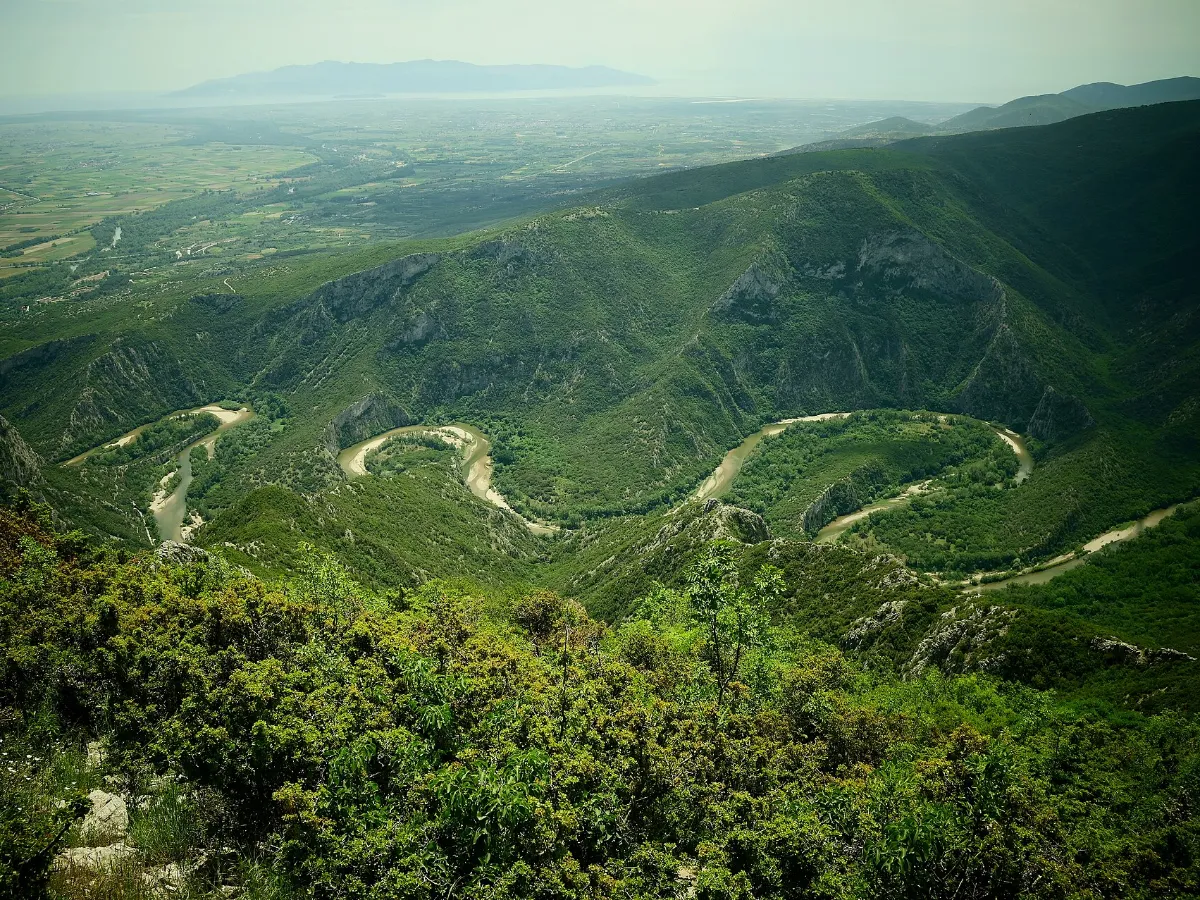
West of Xanthi the Nestos river winds between steep, forested mountains, forming one of the most beautiful gorges in northern Greece. You can walk the riverside paths, canoe or kayak on the river, or simply stop at the viewpoints above the meanders.
The Pomak villages
In the Rhodope foothills north of Xanthi there are around 50 small, isolated villages of the Pomaks, a Muslim community of traditional herders and tobacco growers. A drive through their valleys shows a side of Greece few visitors ever see.
Lake Vistonida and Porto Lagos
Between Xanthi and Komotini, Lake Vistonida and its lagoons form a wetland with more than 300 bird species. At Porto Lagos, the little church of Agios Nikolaos stands on an islet reached by a wooden footbridge – one of the most photographed spots in Thrace.
Ancient Maroneia
On the coast south of Komotini, ancient Maroneia was once a prosperous city-state. Its theatre, agora and sections of the city walls lie among olive trees above the sea, and the coastal road to Mesimvria is one of the most scenic drives in the region.
Komotini
Komotini’s old bazaar, half Anatolian and half Western, keeps its narrow lanes and traditional trades. Try the roasted chickpeas, pastelli and soutzouk loukoum the town is known for.
Alexandroupoli, the Evros Delta and Dadia Forest
Alexandroupoli, the largest port of Thrace, is known for its seafront lighthouse. Nearby, the Evros Delta is a wilderness of wetlands home to 316 of the 420 bird species recorded in Greece, explored by small boat. Inland, the Dadia Forest is a WWF-protected reserve with marked walking paths and the last refuge of the black vulture in the Balkans. From Alexandroupoli, ferries also sail to the island of Samothrace.
When to go
Spring and autumn are the best seasons for walking and for birdwatching, when migrating birds pass through the wetlands. Summer is hot but perfect for combining Thrace with the beaches of Kavala or Halkidiki.
Getting there and around
Thrace is far from Athens, so the easiest way is to fly to Thessaloniki, Kavala or Alexandroupoli. Distances between the sights are long and public transport is limited; with a private driver you can see the old towns, the gorge and the wetlands without worrying about routes and timetables.
Ready-made trip
Discover Thrace in 4 days – Kavala, Xanthi, the Nestos gorge, the Pomak villages, Porto Lagos, Maroneia, Komotini, Alexandroupoli and the Dadia Forest or the Evros Delta, with your own driver.
Frequently asked questions
How many days do we need for Thrace?
Four days cover the highlights from Kavala to Alexandroupoli; add days for Samothrace or a slower pace.
Is Thrace good for birdwatching?
Yes – Lake Vistonida, the Nestos delta, the Evros Delta and the Dadia Forest are among the most important bird areas in Greece.
Tell us your dates and how many you are, and we will reply within 24 hours with your plan and private transfers. Ask for your trip
More ideas: Thrace destination guide · Macedonia · Best time to visit Greece